I'm Not Paying

By: State of Freedom
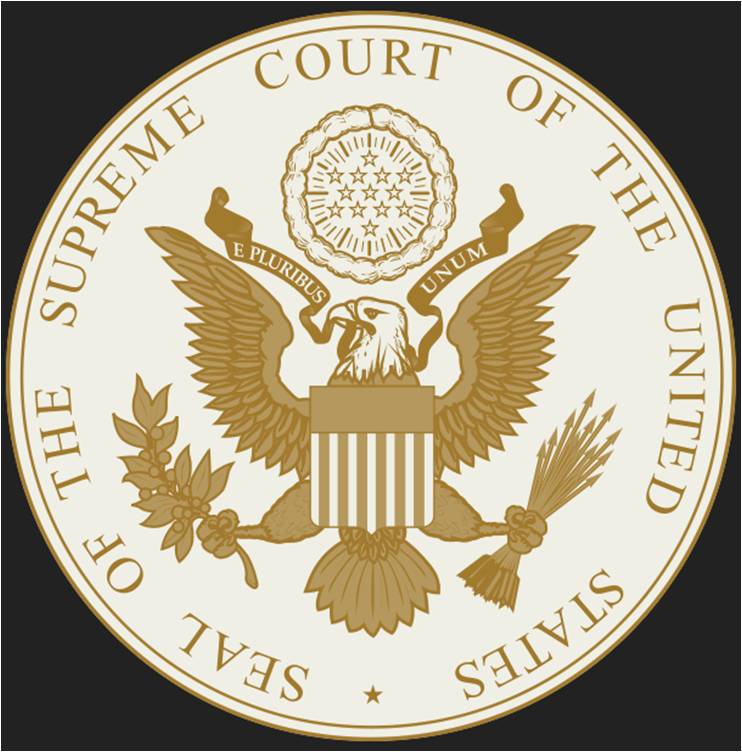
Back in September 2017, Mark Janus, a worker in the Department of Healthcare and Family Services, sued the American Federation of State, County and Municipal Employees for violation of his First Amendment Rights. Janus argued that the Illinois law requiring non-union members to pay fair-share fees violated his rights because of where the funds end up. This kind of decision would in effect overturn the decision reached in the 1977 Supreme Court Case Abood vs. Detroit Board of Education. In this case, a Michigan law, identical to the one in Illinois, was called into question with regards to personal rights and freedoms. The Supreme Court however, ruled in favor of the Board of Education, arguing that the funds help all employees regardless of whether or not they decide to be members.

Notoriously, public sector unions have used fair-share fees to lobby in Congress and donate directly to certain political parties. The issue becomes the money doesn't go where the people paying want it to go, to improve their work sector. Instead it continually goes to the same politicians, giving public sector unions increased political power when it comes to policies. So, how is this any different than a political action committee (PAC)? A PAC is a private group that lobbies in Congress to gain political influence, so how is what the unions are doing any different? These are some of the sentiments concerning Justice Kennedy, who notoriously usually swings on either side of the political spectrum when it comes to court cases.
Many right-winged organizations and communities are backing Janus' argument, claiming the donation of money from public sector unions to [usually] Democratic candidates and politicians violates their First Amendment rights because their money is directly going to a candidate and ideals they don't support, hence why people like Janus choose not to be union members. However, if the Supreme Court was to do away with the fair-share fees, what would happen to unions in general? Would more people opt not to join to keep more of their paycheck in their own pocket rather than in the pockets of politicians? Would public sector unions be able to exist anymore?

If public sector unions were to disseminate, what would become of our economy? Who would protect our working class Americans? These are some of the sentiments expressed by Justice Ginsburg, who also worries how this decision could affect private sector unions as well. It's no secret that unions are in place in order to protect hard working Americans from large corporations. Within this Supreme Court case, the ALCU, a group notorious for speaking up about First Amendment rights, submitted an amicus brief, a character reference, on behalf of the AFSCME thus strengthening their defense.
Another worry with regards to the protection of union workers is the involvement of large corporations like the Koch brothers involvement in the case. With their involvement comes the eminent threat that if the fair-share fee goes away, unions will disappear and large corporations will monopolize, quelling the voices of all Americans.
So how do we address such a fragile issue? Obviously the goal is to have no one's rights infringed upon, but the monopolization of our economy is a threat needed to be taken seriously. So what should be the purpose of the fair-share funds? Should non-members be required to pay? Will taking away the requirement hurt us in years to come?




I think this is a pretty pressing issue for many Americans but the problem is that I'm assuming not a whole lot of people know this is happening. It could be appalling for some whereas it is beneficial to others, making it a very split debate.
ReplyDelete